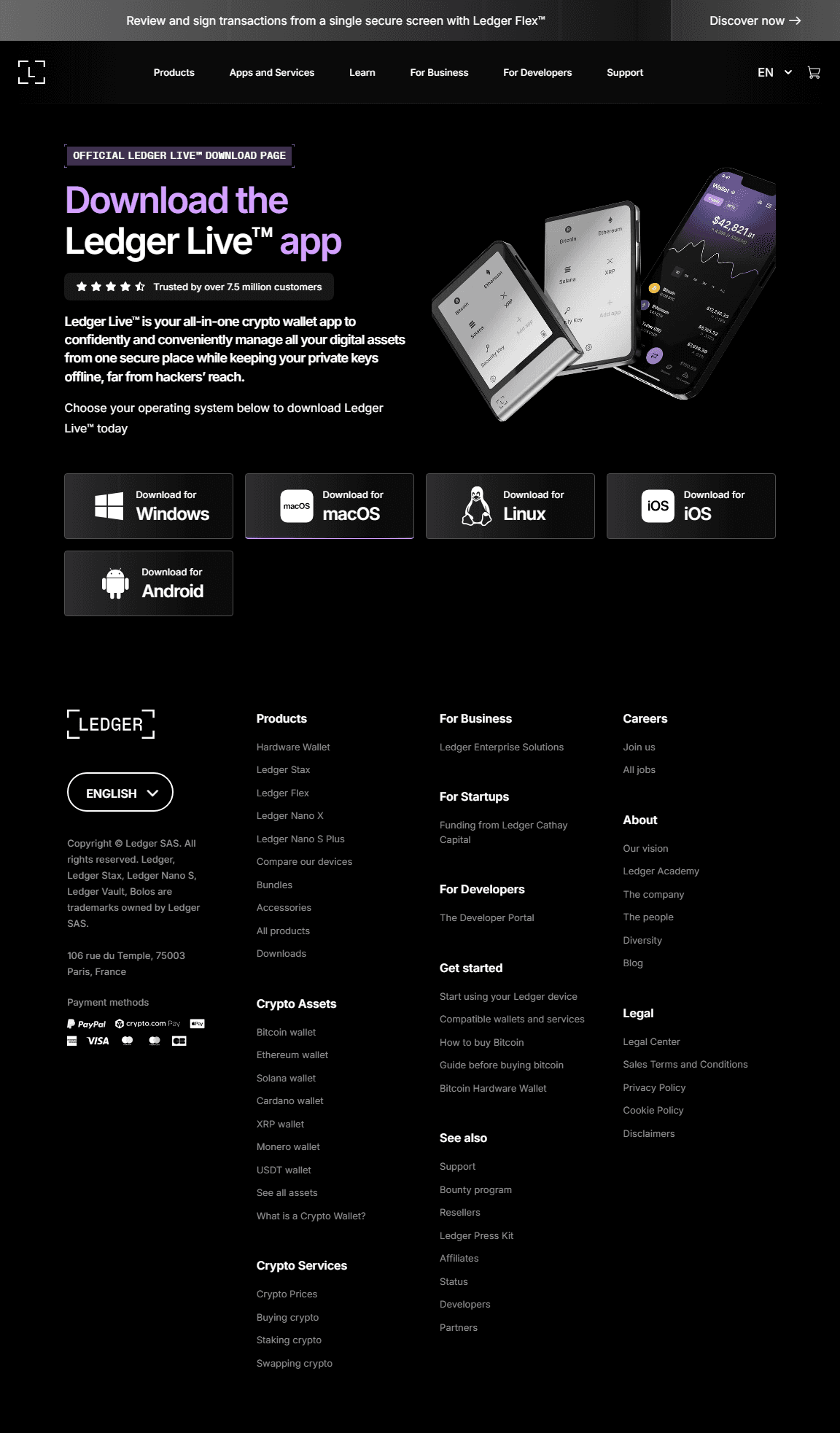
Ledger Login: A Complete Guide to Secure Access and Crypto Management
Managing cryptocurrency safely requires a combination of strong hardware security and reliable software tools. Ledger devices—such as the Ledger Nano S Plus and Ledger Nano X—offer some of the highest levels of protection for digital assets. However, to access and manage your crypto, you will use Ledger Live, the official application that connects with your Ledger hardware wallet. This guide explains everything about the Ledger login process, how it works, how to troubleshoot issues, and how to keep your wallet secure.
Understanding Ledger and Ledger Live
Ledger is a leading hardware wallet company known for its secure crypto storage solutions. Unlike software wallets, Ledger wallets keep your private keys offline, away from internet threats. Ledger Live is the companion app that allows users to manage their crypto easily from a computer or mobile device.
With Ledger Live, users can:
Add and manage multiple crypto accounts
View real-time portfolio data
Buy, sell, and swap supported assets
Install and update Ledger device applications
Confirm transactions securely via the hardware wallet
The Ledger login process is different from traditional login systems. Instead of typing a username and password, you authenticate by physically connecting your Ledger device and confirming actions on the device itself.
How Ledger Login Works
Ledger uses a unique login system built around the security of the hardware device. Unlike online platforms, Ledger Live does not store any account credentials or private keys. Instead, your Ledger hardware wallet serves as your primary login method.
Each time you open Ledger Live, you authenticate by:
Connecting your Ledger device
Entering the PIN on the device
Confirming actions physically on the device screen
This ensures that even if your computer is compromised, attackers cannot access or move your funds without your physical device and PIN.
How to Log in to Ledger Live (Desktop)
Follow these steps to log in using Ledger Live on a computer:
Step 1: Install Ledger Live
If you haven't already installed it, download Ledger Live from the official Ledger website. Install the program and open it to begin the setup process.
Step 2: Connect Your Ledger Device
Use your USB cable to connect your Ledger Nano S Plus or Nano X. Ensure the cable is in good condition and firmly attached.
Step 3: Enter Your PIN
Your Ledger device will ask for your PIN. This must be entered directly on the device, not on your computer. After entering the correct PIN, the device will unlock.
Step 4: Open the Desired Crypto App on the Device
Depending on what action you want to perform—Bitcoin, Ethereum, or another asset—open the corresponding application on your Ledger device.
Step 5: Access Your Accounts in Ledger Live
Once your device is recognized, Ledger Live will display your accounts, balances, and dashboard. You are now fully logged in and ready to manage your crypto.
How to Log in to Ledger Live (Mobile)
Ledger also offers a mobile version of Ledger Live, compatible with iOS and Android.
Step 1: Install Ledger Live Mobile
Download the app from the Apple App Store or Google Play Store.
Step 2: Connect via Bluetooth (Ledger Nano X Only)
If you are using the Ledger Nano X, you can connect through Bluetooth.
For Nano S Plus, USB-OTG cables may be required depending on your device.
Step 3: Confirm Pairing
When pairing via Bluetooth, verify that the code shown on your Ledger matches the one on your phone.
Step 4: Enter PIN
Unlock the Ledger device by entering your PIN.
After authentication, your accounts and portfolio will appear in the app.
Ledger Login Does Not Use Passwords—Here’s Why
Ledger does not use traditional login credentials like email and password. This design eliminates risks associated with phishing, password leaks, and credential theft.
Instead, Ledger relies on:
PIN code: Controls access to your hardware wallet
Recovery phrase: Used to restore your wallet if the device is lost
Physical confirmation: Every transaction must be verified on the device
This structure ensures that even if someone gains access to your computer, they cannot control your crypto without the hardware device and PIN.
Troubleshooting Ledger Login Issues
Sometimes users may face difficulties when trying to log in. Here are the most common issues and fixes:
1. Device Not Detected
Possible solutions include:
Restart Ledger Live
Try a different USB port or cable
Use the original cable if possible
Make sure the device is updated to the latest firmware
2. Incorrect PIN Attempts
Entering the wrong PIN too many times will reset the device.
You can restore the wallet using your 24-word recovery phrase.
3. Ledger Live Not Opening
Try:
Updating Ledger Live
Reinstalling the program
Restarting your computer
4. Bluetooth Connection Failure
For Nano X:
Turn Bluetooth off and on
Restart both the phone and Ledger device
Forget the device in Bluetooth settings and reconnect
5. “Update Required” Errors
This means your Ledger device or Ledger Live needs updating. Perform the necessary updates through Ledger Live.
Best Security Practices for Ledger Login
To protect your crypto assets, always follow these precautions:
Use a Strong PIN
Avoid PINs that are too simple or easy to guess. A longer PIN provides better protection.
Never Share Your Recovery Phrase
Your 24-word recovery phrase is the master key to your funds.
Always store it offline in a secure location, never digitally.
Confirm All Details on Your Device
Before sending crypto, verify the address, amount, and network fee directly on the Ledger device screen.
Download Only from Official Sources
Fake Ledger apps and phishing sites are common.
Always check that you are downloading Ledger Live from the official Ledger website or trusted app stores.
Keep Your Device and Ledger Live Updated
Updates fix bugs and add new security protections.
Why Ledger Login Is One of the Safest Methods
Ledger’s login system is fundamentally different from traditional online accounts. Since it requires physical device access and PIN verification, it eliminates many risks associated with cyberattacks.
Key benefits include:
Hardware-level protection
Mandatory physical confirmation
No online storage of sensitive information
Recovery possible even if device is lost
This makes Ledger one of the most secure ways to store and manage cryptocurrencies.
Conclusion
The Ledger login process is designed with maximum security in mind. Instead of relying on passwords, Ledger Live uses your hardware wallet as your authentication method, ensuring that only you can access your funds. Whether accessing through desktop or mobile, the process remains secure, simple, and highly protected against online threats. By following best practices and keeping your recovery phrase safe, you can trust Ledger as a reliable and long-term solution for managing your digital assets.